







Find Your Ideal Arranging Teacher for Lessons Online
For beginners to advanced, kids & adults, these excellent Arranging teachers are vetted by staff experts and reviewed by verified students of online lessons at Lessonface.
View All Teachers Discover experienced, passionate Arranging teachers to help you reach your next level.

3 Years on Lessonface
Amanda B Johnson
For over 33 years as a musician and 29 years as an educator for all grade levels and teachers alike, I have the experience of learning from my previous students and applying more efficient techniques to current and future ones. Much like my students, I work towards learning the most innovative techniques while foreseeing the trends of the future in music and education.
$35.00 / 30 min

New to Lessonface
Rodrigo Pascale
Hi, everyone! I am Rodrigo Pascale, an internationally awarded composer, who is pursuing my Doctor of Musical Arts at the Peabody Institute of Johns Hopkins University. My music has been performed worldwide by leading ensembles in new music, including the JACK Quartet, International Contemporary Ensemble, Moscow Contemporary Music Ensemble (MCME), Splinter Reeds, loadbang,…
$30.00 / 30 min

12 Years on Lessonface
Yoon Jae Lee
I am a multifaceted musician with busy career as a conductor, arranger, pianist, and teaching artist. I call myself an “artrepreneur.” I founded my own orchestra called Ensemble 212 in New York and we have received critical acclaim for our innovative programming of works by living composers, exciting interpretations of the standard repertoire, and my own arrangements and…
$80.00 / 45 min

7 Years on Lessonface
Cahaya Drucilla
I approach music with a holistic mindset: with work ethic and discipline, yet also empathy and passion from the student's perspective. I see music as a tool to enhance the expression that already exists within the individual, while pinpointing necessary skills that still need to be developed.
$35.00 / 30 min

Want help finding your ideal arranging teacher?
Fill out the quick form and teachers who fit your needs will be in touch.
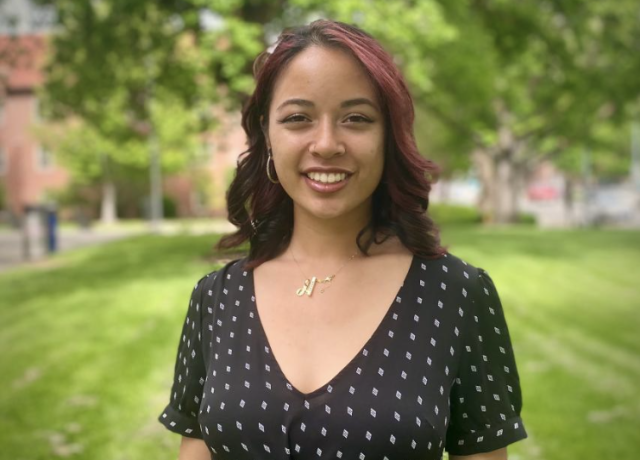
Photo: Cahaya Drucilla



Great Arranging Teachers
Through our longstanding commitment to treat teachers equitably, we work with phenomenal instructors — including members of the MET Orchestra, Juilliard and Berklee alumni, GRAMMY® winners and nominees, and many other professional educators.
View Teachers 
Photo: Felipe Burundarena
About Arranging Lessons at Lessonface
Find a great teacher, securely book a first lesson or trial, and meet via Zoom. Lessonface handles the lesson links and sends you reminders. Recordings, assignments, and notes are easy to access before, during, and after the lesson.
View Teachers 


Latest from the Blog
Tips, stories, and interviews from the Arranging community.

Lessonface Guarantee
Reach out to tell us within 48-hours of taking an unsatisfactory lesson, class, or course, and we will offer you a refund. Read more about the guarantee.

Designed for All Ages
Creating a joyful, safe, and convenient educational experience for our students is our goal. Learn more about our kid-friendly features here, or read our privacy policy and safety precautions here.
Have more questions? Check out our FAQ, or reach out.
About Lessonface
At Lessonface, we've held our mission of helping students achieve their goals while treating teachers equitably for over ten years. We're here to help you connect to your ideal teacher and make real progress. Please reach out with any questions or concerns.
 Claire Cunningham
- Founder & CEO
What is Lessonface?
Lessonface is a Public Benefit Corporation operating since 2012 whose purpose is to connect students with great teachers for music, language, and arts lessons. Teachers on Lessonface set their own rates and profiles, and students can select their ideal teachers based on their background, teaching style, rates, and schedule.
How do online Arranging lessons work?
Online lessons are effective, affordable, and accessible. Lessonface qualifies teachers in over 300 music, language, and arts subjects, including Arranging. Students can browse teachers' profiles, send them messages, and book lessons securely through Lessonface. Lessons happen via Zoom links that are securely generated for each lesson, and can be easily recorded by the teacher. Recordings, notes, and attachments can all be accessed from within the Lessonface dashboard. Lessons can be booked one at a time, in packages, or by subscription to save a spot on the teacher's calendar. Lessonface hosts recitals, open mics, group classes, and self-paced courses too. Registering an account is free so it's easy to get started reaching out to find your ideal instructor. Contact us with any further questions!
What is the best method for learning Arranging ?
We're biased, of course, but at Lessonface we believe the best way to learn Arranging is through one-on-one lessons. Personalized instruction means your teacher can tailor every lesson to your goals, learning style, and skill level. Online group classes can also be a great way to make learning fun and social. Learning Arranging online makes it easy to stay consistent, which is essential to steady progress.
There are plenty of apps and YouTube videos out there to help with learning Arranging, but most teachers agree that those resources work best as supplements to, not replacements for, one-on-one instruction. A skilled Arranging teacher can identify bad habits before they become ingrained, help you focus on what matters most, and solve problems as soon as they arise, often saving you months of frustration and wasted practice time. The bottom line? A real teacher accelerates your progress and keeps you on the right path from day one.
How do I find the best teacher for me for Arranging lessons?
With over 100 qualified Arranging teachers who have together earned an average of 5 out of 5 stars over 7 lesson reviews by verified students, you can be sure to find a great instructor at Lessonface.
Lessonface offers free tools to help you find the ideal tutor for you or your family:
- Use the open filtering system
- Use our matching service to describe your background, scheduling preferences, and any particular goals, and qualified Arranging teachers will respond.
You can view teachers' bios, accolades, rates, send them a message and book lessons from their profiles.
Many teachers offer a free trial, and you can book lessons one at a time until you decide you prefer to book a bundle or subscribe, so don't hesitate to try. Teachers may also offer group classes, self-paced courses, and downloadable content, so there are more ways to get started while you're still getting acquainted with the community.
How much do Arranging lessons cost?
Arranging teachers on Lessonface set their own rates. Rates are displayed on the teachers' profile pages and in the checkout process prior to booking. Teachers may choose to change their rates for new bookings, and students will always be notified prior to making payment. Some Arranging teachers offer a free trial lesson to new students, which are not factored into the average prices.
How does payment work for Arranging lessons?
There is no fee until you book your first paid lesson. Many teachers offer free trial lessons. Students can opt to book one a time, or purchase lesson packages or subscriptions for scheduling convenience, and, depending on the teachers, a discount. Payment can be made by credit card or Paypal. Lessons booked with a subscription are pre-paid three days before the end of the month for lessons that are scheduled for the following month. Subscription payments can only be made by credit card (not Paypal). Teachers receive their payment after the lesson has been completed.
What is the difference between composition and arranging?
Composition and arranging are closely related skills that often get conflated — and in practice, many musicians do both. But they're distinct disciplines with different starting points.
Composition means creating original music from scratch — the melody, the harmony, the structure, the emotional arc. A composer starts with a blank page. The ideas are their own.
Arranging means taking existing music and reimagining it for a different context — a different ensemble, a different style, a different purpose. An arranger might take a jazz standard and score it for string quartet, or adapt a pop song for a choir. The underlying material belongs to someone else; the arranger's job is to serve that material while bringing their own craft to its presentation.
A few things that blur the line:
- Orchestration — deciding which instruments play which parts — is a skill shared equally by both
- Composers arrange — most do significant arranging work, either of others' music or of their own sketches into full scores
- Arrangers compose — a skilled arranger often adds countermelodies and transitions that amount to original composition
- In pop and commercial music the two roles frequently merge — a producer building a full track is simultaneously arranging and composing
For students, learning arranging is one of the best ways to develop compositional skills — and that knowledge feeds directly back into original work.