


















Find Your Ideal Music Theory Teacher for Lessons Online
For beginners to advanced, kids & adults, these excellent Tuba teachers are vetted by staff experts and reviewed by verified students of online lessons at Lessonface.
View Teachers Discover experienced, passionate Music Theory teachers to help you reach your next level.
100+
Vetted Teachers
5.0
Average Rating
170+
Student Ratings
~$35
Avg. Lesson Price
View All Teachers

12 yrYears
Teaching on Lessonface
Ray Suhy
I have been teaching guitar for over 25 years. I started teaching almost as soon as I began playing as I wanted to make music with my friends. I grew up playing classic rock and metal and gravitated towards jazz in my teen years. I attended Berklee College Of Music and The New School Jazz Program.
$30.00 / 30 min

6 yrYears
Teaching on Lessonface
Altus Hendriks
I am a highly motivated and results-driven teacher with an extensive background in education spanning over 15 years. Holding a Doctorate and Master’s degree in Music Composition, as well as a Bachelor’s degree in Piano Performance, I possess a solid academic foundation in my field.
$20.00 / 30 min

7 yrYears
Teaching on Lessonface
Yee-Sik Wong
Dr. Yee-Sik Wong Yee Sik, a native of Hong Kong, China, began accompanying ballet classes in 2007 while she was pursuing her D.M.A. in Piano Performance and Pedagogy at the University of Iowa. Since then, she has played for the Tulsa Ballet and the Kansas City Ballet for 15 seasons.
$30.00 / 30 min

6 yrYears
Teaching on Lessonface
Kati Falk-Flores
*Next Availability: Summer 2026* Composer. Vocalist. Musician. Kati Falk-Flores holds a Master’s in Music Composition, and currently writes music for Hollywood’s advertising campaigns, with recent placements for Furiosa: A Mad Max Saga, and Star Wars Andor.
$50.00 / 30 min
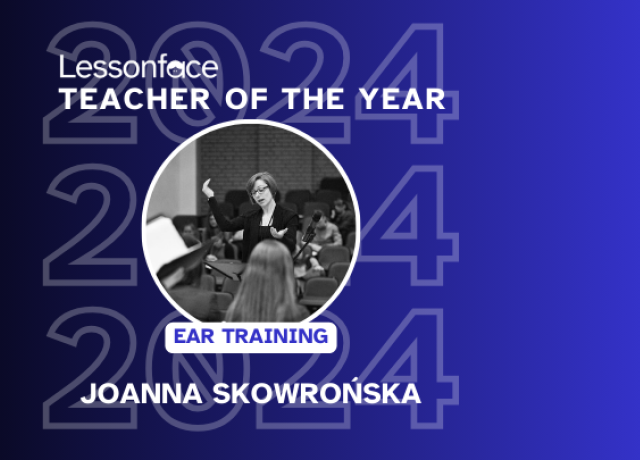
Photo: Joanna Skowrońska
My son is working towards studying music in college, but he has attention and memory issues. Joanna has done a great job in breaking down music theory and ear training lessons into pieces he can easily grasp and making the lessons engaging and affirming for him. It's been a pleasure working with her!

Want help finding your ideal music theory teacher?
Fill out the quick form and teachers who fit your needs will be in touch.
Join live sessions and learn Music Theory alongside others.
Upcoming Live Classes
4.9
Average Rating
30+
Student Ratings
~$118
Avg. Price



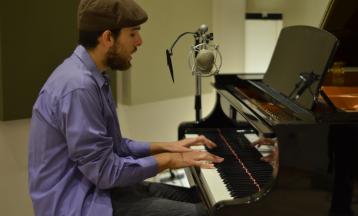




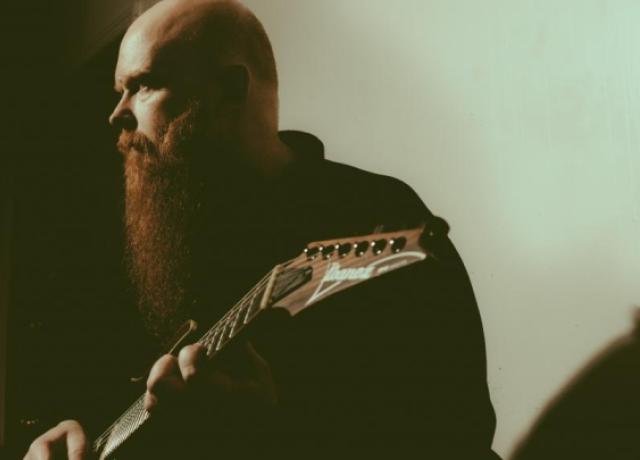
Photo: Ray Suhy




Great Music Theory Teachers
Through our longstanding commitment to treat teachers equitably, we work with phenomenal instructors — including members of the MET Orchestra, Juilliard and Berklee alumni, GRAMMY® winners and nominees, and many other professional educators.
View Teachers 
Photo: Yee-Sik Wong
About Music Theory Lessons at Lessonface
Find a great teacher, securely book a first lesson or trial, and meet via Zoom. Lessonface handles the lesson links and sends you reminders. Recordings, assignments, and notes are easy to access before, during, and after the lesson.
View Teachers Learn Music Theory at your own pace with self-paced courses.
6
Self-Paced Courses
5.0
Average Rating

All-in-one guitar tuning course: How to get your guitar in tune no matter how drastically out of tune it is
 Tyson Farmer
 11 chapters
$20.00
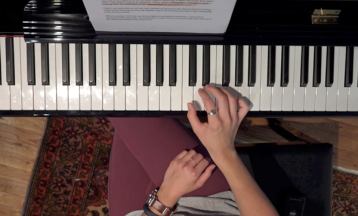
Downloadable materials include packs, guides, and exercises to help you learn.
6
Downloadables
Students have given their Lessonface
lessons over
37,000+ reviews.
Alan has been very helpful to my son in understanding challenging music theory concepts in a college class. He has been flexible about scheduling lessons and willing to volunteer extra time. He has been kind and easy to work with!
Creative, perspective shifting and fun aha moments for "playing with" rather than "working on" stuck unfinished songs.
Sean's Seed to Song course was instrumental in helping me begin my journey as a songwriter. I have little to no background in music, and before this course writing a song was a dream of mine that felt monumentally complicated. I didn't know where to begin and was overwhelmed by all the different directions songwriting can take, and this overwhelm stopped me before I started. In Seed to Song, Sean did a great job of breaking songwriting up into small, digestible pieces that helped to relax my hyper critical mind so I could actually begin to (and enjoy!) writing my first song. I highly recommend this course!


Latest from the Blog
Tips, stories, and interviews from the Music Theory community.


Lessonface Guarantee
Reach out to tell us within 48-hours of taking an unsatisfactory lesson, class, or course, and we will offer you a refund. Read more about the guarantee.

Designed for All Ages
Creating a joyful, safe, and convenient educational experience for our students is our goal. Learn more about our kid-friendly features here, or read our privacy policy and safety precautions here.
Have more questions? Check out our FAQ, or reach out.
About Lessonface
At Lessonface, we've held our mission of helping students achieve their goals while treating teachers equitably for over ten years. We're here to help you connect to your ideal teacher and make real progress. Please reach out with any questions or concerns.
 Claire Cunningham
- Founder & CEO
What is Lessonface?
Lessonface is a Public Benefit Corporation operating since 2012 whose purpose is to connect students with great teachers for music, language, and arts lessons. Teachers on Lessonface set their own rates and profiles, and students can select their ideal teachers based on their background, teaching style, rates, and schedule.
How do online Music Theory lessons work?
Online lessons are effective, affordable, and accessible. Lessonface qualifies teachers in over 300 music, language, and arts subjects, including Music Theory. Students can browse teachers' profiles, send them messages, and book lessons securely through Lessonface. Lessons happen via Zoom links that are securely generated for each lesson, and can be easily recorded by the teacher. Recordings, notes, and attachments can all be accessed from within the Lessonface dashboard. Lessons can be booked one at a time, in packages, or by subscription to save a spot on the teacher's calendar. Lessonface hosts recitals, open mics, group classes, and self-paced courses too. Registering an account is free so it's easy to get started reaching out to find your ideal instructor. Contact us with any further questions!
What is the best method for learning Music Theory ?
We're biased, of course, but at Lessonface we believe the best way to learn Music Theory is through one-on-one lessons. Personalized instruction means your teacher can tailor every lesson to your goals, learning style, and skill level. Online group classes can also be a great way to make learning fun and social. Learning Music Theory online makes it easy to stay consistent, which is essential to steady progress.
There are plenty of apps and YouTube videos out there to help with learning Music Theory, but most teachers agree that those resources work best as supplements to, not replacements for, one-on-one instruction. A skilled Music Theory teacher can identify bad habits before they become ingrained, help you focus on what matters most, and solve problems as soon as they arise, often saving you months of frustration and wasted practice time. The bottom line? A real teacher accelerates your progress and keeps you on the right path from day one.
How do I find the best teacher for me for Music Theory lessons?
With over 100 qualified Music Theory teachers who have together earned an average of 5 out of 5 stars over 176 lesson reviews by verified students, you can be sure to find a great instructor at Lessonface.
Lessonface offers free tools to help you find the ideal tutor for you or your family:
- Use the open filtering system
- Use our matching service to describe your background, scheduling preferences, and any particular goals, and qualified Music Theory teachers will respond.
You can view teachers' bios, accolades, rates, send them a message and book lessons from their profiles.
Many teachers offer a free trial, and you can book lessons one at a time until you decide you prefer to book a bundle or subscribe, so don't hesitate to try. Teachers may also offer group classes, self-paced courses, and downloadable content, so there are more ways to get started while you're still getting acquainted with the community.
How much do Music Theory lessons cost?
Music Theory teachers on Lessonface set their own rates. Rates are displayed on the teachers' profile pages and in the checkout process prior to booking. Teachers may choose to change their rates for new bookings, and students will always be notified prior to making payment. The average paid for a Music Theory lesson on Lessonface in the past 12 months was $37.67. Some Music Theory teachers offer a free trial lesson to new students, which are not factored into the average prices.
How does payment work for Music Theory lessons?
There is no fee until you book your first paid lesson. Many teachers offer free trial lessons. Students can opt to book one a time, or purchase lesson packages or subscriptions for scheduling convenience, and, depending on the teachers, a discount. Payment can be made by credit card or Paypal. Lessons booked with a subscription are pre-paid three days before the end of the month for lessons that are scheduled for the following month. Subscription payments can only be made by credit card (not Paypal). Teachers receive their payment after the lesson has been completed.
What is music theory, and who should learn it?
Music theory is the study of how music works; the principles and patterns that explain why certain notes, chords, and rhythms sound the way they do together. It's a framework for understanding and communicating about music, whether you're listening, performing, composing, or improvising.
Sheet music literacy is one part of music theory, but theory goes much further. You'll also explore scales, intervals, chords, chord progressions, rhythm, melody, harmony, form, and more. You can have strong theory knowledge without being able to read notation fluently, and vice versa.
Almost any musician benefits from theory. Songwriters use it to build chord progressions, structure songs, and understand why a key change hits so hard emotionally. Classical musicians use theory to analyze the works they're playing — understanding form, harmonic language, and phrasing helps bring interpretations to life. Jazz musicians rely heavily on theory for improvisation, reharmonization, and navigating complex chord changes on the fly. Producers and beatmakers use theory to build loops, layer sounds, and create tension and release. Even if you play entirely by ear, theory gives you the vocabulary to describe what you're already hearing intuitively.
You don't need to be a "serious" musician to benefit. Hobbyists often find that a little theory makes playing more satisfying and less mysterious. It's one of those subjects that tends to make everything else click.
What's the best way to learn music theory: apps, books, or lessons?
All three have their place, and the best approach usually combines more than one.
Apps are great for drilling certain fundamentals — note recognition, interval identification, chord spelling. They're convenient and good for building habits, but they tend to be weak on explanation and context. You can complete a lot of app exercises without ever understanding why any of it works.
Books give you depth and structure. A good theory textbook walks you through concepts in a logical sequence and gives you exercises to reinforce them. The downside is that books are passive — they can't tell you when you're misunderstanding something or help you connect the material to your own playing.
Lessons with a teacher are the most efficient path for most people. A good theory teacher adapts to how you think, catches misconceptions early, and ties concepts directly to music you care about. That last part matters more than it might seem — theory learned in the abstract tends not to stick. A teacher who knows your instrument and musical style can show you how theory applies to the music you're already playing, which makes it far more relevant and exciting. Theory that helps you understand a song you love, or solve a problem in your own playing, becomes part of how you hear and think about music.
For many students, the ideal setup is lessons as the backbone, with apps or books as supplements — useful for reference, review, or getting ahead between sessions.
Does music theory apply to all genres of music?
Yes — though the way theory gets applied varies a lot depending on the style.
Western music theory, as it's traditionally taught, grew out of European classical music. So some concepts map more directly onto classical repertoire than onto other styles. But the core building blocks — scales, intervals, chords, rhythm, melody, harmony — show up everywhere, even when they go by different names or operate by different rules.
Jazz has its own rich theoretical tradition, with extended harmonies, modal concepts, and reharmonization techniques that go well beyond classical theory basics. Rock and pop rely heavily on chord progressions and song structure, and understanding those patterns makes you a sharper songwriter and collaborator. Blues has its own logic built around the blues scale, call-and-response phrasing, and a specific relationship to the 12-bar form. Folk, country, and singer-songwriter styles lean on functional harmony — knowing your I, IV, and V chords will take you a long way.
Non-Western musical traditions — Indian classical music, Arabic maqam, West African rhythmic systems — have their own sophisticated theoretical frameworks that don't always map neatly onto Western theory. If those traditions are central to your musical life, it's worth seeking out a teacher with specific expertise in them.
The takeaway: music theory isn't one-size-fits-all, but some grounding in it is useful no matter what you play. A good teacher will connect theory to your genre rather than teaching it in a vacuum.
How does music theory help with songwriting?
Music theory gives songwriters a toolkit — not a set of rules to follow, but a set of options to draw from.
At the most practical level, theory helps you build chord progressions that work. Understanding how chords relate to each other within a key means you can move beyond the first few chords you learned and start making intentional choices. Want something that feels unresolved and tense? Stable and warm? Surprising but satisfying? Theory explains why certain progressions create those feelings, and how to reach for them on purpose rather than by accident.
Theory also helps with melody writing. Understanding scales and intervals gives you a sense of which notes will feel consonant or dissonant over a given chord, which helps when you're trying to shape a hook or figure out why a melodic idea isn't quite landing.
Song structure and form are theory concepts too. Knowing how verses, choruses, bridges, and pre-choruses typically function — and why — gives you a framework to work within or deliberately push against.
One of the most valuable things theory does for songwriters is give you a shared language with collaborators. When you can say "let's try a IV instead of a iv there" or "that modulation lands in the relative major," you spend less time fumbling and more time creating.
You don't need to master theory before you start writing songs — plenty of great songs were written with minimal theory knowledge. But even a little goes a long way.
How does music theory relate to improvisation?
Improvisation can feel like pure spontaneity — and at its best, it is. But most experienced improvisers have a deep well of theoretical knowledge informing every choice they make, even when it doesn't feel like thinking.
At the most basic level, theory gives you a map. Knowing which scales work over which chords means you're not just guessing — you have a framework for making note choices that fit the harmonic context. That's not a creative constraint; it's a foundation that frees you to focus on expression rather than trial and error.
Jazz is the genre most associated with theory-driven improvisation, and for good reason. Jazz improvisers work with complex chord changes, modal frameworks, and sophisticated rhythmic ideas that take years of theoretical study to internalize. But theory-informed improvisation shows up everywhere — blues guitarists navigating the pentatonic scale, rock musicians targeting chord tones, folk fiddlers working within modal scales.
The goal of learning theory for improvisation isn't to think more while you play — it's actually the opposite. You study the framework deeply enough that it becomes instinctive, so your conscious attention is free for musical expression and listening. As the saying goes, you have to learn the rules before you can forget them.
A good teacher can help you bridge the gap between theoretical knowledge and practical application, giving you exercises that connect what you're learning directly to your instrument and style.
What's the difference between music theory, ear training, and sight-reading? Do I need all three?
These three subjects are related but distinct, and understanding the difference can help you figure out what you actually want to study.
Music theory is the study of how music is constructed — scales, chords, harmony, rhythm, form, and the relationships between them. It's primarily an intellectual framework, though a good teacher will always connect it to practical music-making.
Ear training is the practice of developing your musical hearing — learning to identify intervals, chords, rhythms, and melodies by ear. It's closely related to theory, and the two subjects reinforce each other naturally. But ear training is its own discipline with its own exercises and methods, and not every music theory course includes it. If ear training is a priority for you, it's worth asking about specifically when looking for a teacher.
Sight-reading is the ability to read and perform written music in real time. It draws on theory knowledge — you need to understand notation, rhythm, and key signatures — but it's primarily a performance skill developed through dedicated practice. Again, not automatically included in theory lessons.
The good news is that all three areas complement each other. Strong theory knowledge makes ear training more intuitive, and both make sight-reading more meaningful. Many students study them in combination, while others focus on one at a time depending on their goals.
If you're not sure which to prioritize, a good teacher can help you assess where you are and what will make the biggest difference for your musical goals.