





Find Your Ideal Ear Training Teacher for Lessons Online
For beginners to advanced, kids & adults, these excellent Ear Training teachers are vetted by staff experts and reviewed by verified students of online lessons at Lessonface.
View All Teachers Discover experienced, passionate Ear Training teachers to help you reach your next level.
100+
Vetted Teachers
5.0
Average Rating
50+
Student Ratings
~$38
Avg. Lesson Price
View All Teachers

6 Years on Lessonface
Sonnie Sitz
As an award-winning vocal instructor, pedagogue and performer with a Master's Degree in Music I am passionate about helping students achieve their goals and grow as musicians, all while having fun! (Because music HAS to be fun). I graduated from the University of Pretoria with distinction and academic honors for my Bachelor degree of Music, specializing in music education, music…
$40.00 / 30 min

New to Lessonface
Yasmin Folini
Hello! I’m Yasmin, a music educator dedicated to helping students truly understand and connect with music. I hold a BA and an MA in Music Pedagogy from the Liszt Ferenc Academy of Music (Kodály Institute) and bring over 10 years of experience teaching music to all ages, from young children to university students.
$20.00 / 45 min

6 Years on Lessonface
Jessica Viner
Jessie Lark | Vocal and Songwriting Teacher Jessica Viner is a seasoned singer-songwriter, performer, and vocal coach with over a decade of professional experience. Her supportive teaching approach helps students of all levels find their voice and potential.
$35.00 / 30 min

8 Years on Lessonface
Steve Boniello
**New or existing students, please send me a message regarding scheduling. My availability is limited and it's easier to discuss on a case by case basis. New Students: Please feel free to send me a message about your musical experience and any goals or influences you may have. I'm happy to set up a time to discuss lessons and your goals over the phone as well.
$35.00 / 30 min
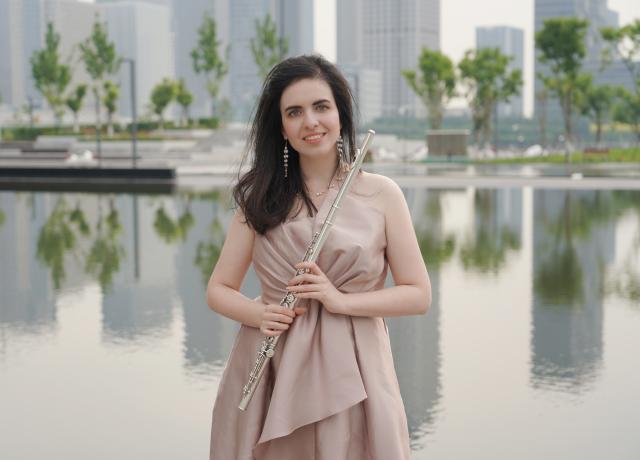
Photo: Agnes Fehervari
Agnes is a fabulous teacher, she's patient, has a plan, creates easy and logical steps for success!

Want help finding your ideal ear training teacher?
Fill out the quick form and teachers who fit your needs will be in touch.
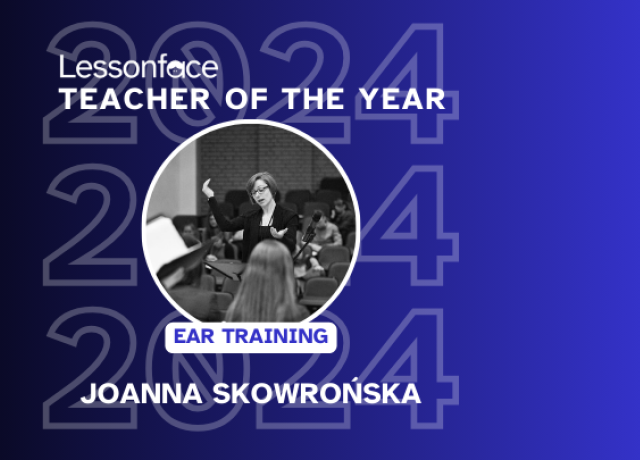
Photo: Joanna Skowrońska


Great Ear Training Teachers
Through our longstanding commitment to treat teachers equitably, we work with phenomenal instructors — including members of the MET Orchestra, Juilliard and Berklee alumni, GRAMMY® winners and nominees, and many other professional educators.
View Teachers 
Photo: Jessica Viner
About Ear Training Lessons at Lessonface
Find a great teacher, securely book a first lesson or trial, and meet via Zoom. Lessonface handles the lesson links and sends you reminders. Recordings, assignments, and notes are easy to access before, during, and after the lesson.
View Teachers 


Latest from the Blog
Tips, stories, and interviews from the Ear Training community.



Lessonface Guarantee
Reach out to tell us within 48-hours of taking an unsatisfactory lesson, class, or course, and we will offer you a refund. Read more about the guarantee.

Designed for All Ages
Creating a joyful, safe, and convenient educational experience for our students is our goal. Learn more about our kid-friendly features here, or read our privacy policy and safety precautions here.
Have more questions? Check out our FAQ, or reach out.
About Lessonface
At Lessonface, we've held our mission of helping students achieve their goals while treating teachers equitably for over ten years. We're here to help you connect to your ideal teacher and make real progress. Please reach out with any questions or concerns.
 Claire Cunningham
- Founder & CEO
What is Lessonface?
Lessonface is a Public Benefit Corporation operating since 2012 whose purpose is to connect students with great teachers for music, language, and arts lessons. Teachers on Lessonface set their own rates and profiles, and students can select their ideal teachers based on their background, teaching style, rates, and schedule.
How do online Ear Training lessons work?
Online lessons are effective, affordable, and accessible. Lessonface qualifies teachers in over 300 music, language, and arts subjects, including Ear Training. Students can browse teachers' profiles, send them messages, and book lessons securely through Lessonface. Lessons happen via Zoom links that are securely generated for each lesson, and can be easily recorded by the teacher. Recordings, notes, and attachments can all be accessed from within the Lessonface dashboard. Lessons can be booked one at a time, in packages, or by subscription to save a spot on the teacher's calendar. Lessonface hosts recitals, open mics, group classes, and self-paced courses too. Registering an account is free so it's easy to get started reaching out to find your ideal instructor. Contact us with any further questions!
What is the best method for learning Ear Training ?
We're biased, of course, but at Lessonface we believe the best way to learn Ear Training is through one-on-one lessons. Personalized instruction means your teacher can tailor every lesson to your goals, learning style, and skill level. Online group classes can also be a great way to make learning fun and social. Learning Ear Training online makes it easy to stay consistent, which is essential to steady progress.
There are plenty of apps and YouTube videos out there to help with learning Ear Training, but most teachers agree that those resources work best as supplements to, not replacements for, one-on-one instruction. A skilled Ear Training teacher can identify bad habits before they become ingrained, help you focus on what matters most, and solve problems as soon as they arise, often saving you months of frustration and wasted practice time. The bottom line? A real teacher accelerates your progress and keeps you on the right path from day one.
How do I find the best teacher for me for Ear Training lessons?
With over 100 qualified Ear Training teachers who have together earned an average of 5 out of 5 stars over 51 lesson reviews by verified students, you can be sure to find a great instructor at Lessonface.
Lessonface offers free tools to help you find the ideal tutor for you or your family:
- Use the open filtering system
- Use our matching service to describe your background, scheduling preferences, and any particular goals, and qualified Ear Training teachers will respond.
You can view teachers' bios, accolades, rates, send them a message and book lessons from their profiles.
Many teachers offer a free trial, and you can book lessons one at a time until you decide you prefer to book a bundle or subscribe, so don't hesitate to try. Teachers may also offer group classes, self-paced courses, and downloadable content, so there are more ways to get started while you're still getting acquainted with the community.
How much do Ear Training lessons cost?
Ear Training teachers on Lessonface set their own rates. Rates are displayed on the teachers' profile pages and in the checkout process prior to booking. Teachers may choose to change their rates for new bookings, and students will always be notified prior to making payment. The average paid for a Ear Training lesson on Lessonface in the past 12 months was $29.96. Some Ear Training teachers offer a free trial lesson to new students, which are not factored into the average prices.
How does payment work for Ear Training lessons?
There is no fee until you book your first paid lesson. Many teachers offer free trial lessons. Students can opt to book one a time, or purchase lesson packages or subscriptions for scheduling convenience, and, depending on the teachers, a discount. Payment can be made by credit card or Paypal. Lessons booked with a subscription are pre-paid three days before the end of the month for lessons that are scheduled for the following month. Subscription payments can only be made by credit card (not Paypal). Teachers receive their payment after the lesson has been completed.
What is ear training, and why do musicians need it?
Ear training is the practice of developing your ability to hear, identify, and reproduce musical elements — intervals, chords, rhythms, melodies, and harmonic progressions — by ear rather than by reading them from a page. It's the process of teaching your brain to understand what your ears are already taking in.
Most musicians encounter ear training as a formal subject in music school, but it's really just a structured version of something every musician does naturally over time. When you recognize a song from its first few notes, when you can tell a major chord from a minor one, when you pick out a melody you heard and play it on your instrument — that's your ear at work.
Why do musicians need it? A few reasons:
- It makes you a faster, more fluent musician. A trained ear can hear a chord progression and immediately understand its structure, hear a melody and reproduce it, or recognize what key a piece is in from the first few bars. What takes an untrained musician laborious trial and error becomes almost instantaneous.
- It connects theory to sound. Music theory can feel abstract and disconnected from actual music until your ear bridges the gap. Ear training is what turns theoretical knowledge into something you can actually hear and use.
- It's essential for improvisation. To improvise fluently, you need to hear in your head what you want to play before your fingers find it. That inner hearing is exactly what ear training develops.
- It makes you a better collaborator. Musicians with trained ears communicate faster, pick up parts more quickly, and adapt more fluidly in ensemble settings.
Ear training is what turns music reading and theory into living, breathing musical understanding.
I've been playing an instrument for years but haven't done formal ear training. Where do I start?
The good news is that you already have more ear training than you think. Years of playing an instrument means years of listening, adjusting intonation, recognizing when something sounds right or wrong, and absorbing the patterns of whatever music you've been playing. Formal ear training gives you a framework for what you already know — and fills in the gaps you didn't know were there.
Where to start depends on what you can already do. A useful self-assessment:
- Can you sing back a melody you just heard? Can you sing back a single note your teacher plays?
- Can you identify whether a chord is major or minor by ear?
- Can you clap back a rhythm accurately after hearing it once?
- Can you hear when two notes are the same or different — and roughly how far apart they are?
Most self-taught or instrument-focused musicians find their ears are stronger in some areas than others. A player who has spent years in a band may have strong rhythm perception but weak interval recognition. A classical player may read fluently but struggle to play anything by ear. Knowing your gaps is the starting point.
From there, the core areas to develop are:
- Interval recognition — identifying the distance between two notes by ear
- Chord quality — major, minor, diminished, augmented, dominant
- Rhythmic dictation — hearing and transcribing rhythms accurately
- Melodic dictation — hearing a melody and writing it down or reproducing it
- Harmonic progressions — recognizing common chord sequences by ear
A teacher who specializes in ear training can assess where you are and build a program around your specific needs and instrument.
Can anyone develop a good musical ear, or is it a natural talent?
The research is pretty clear on this, and the answer is encouraging: for the vast majority of musicians, a good musical ear is developed, not born. Natural aptitude varies — some people pick things up faster than others — but the core skills of ear training are learnable by almost anyone willing to put in consistent practice.
It helps to separate two distinct abilities that often get conflated. Relative pitch — the ability to identify intervals, chords, and melodies in relation to a reference note — is trainable at any age and is what most ear training focuses on. Research consistently shows that with regular practice, musicians at all levels can develop strong relative pitch regardless of where they started.
Perfect pitch — the ability to identify any note in isolation without a reference — is a different story. Research suggests it has a significant genetic component and is most easily developed in early childhood, during a critical window of auditory development. Most adults cannot develop true perfect pitch through training alone, though some degree of pitch memory can be cultivated with dedicated practice.
The good news for most learners is that relative pitch is far more musically useful than perfect pitch anyway. The ability to hear how music moves — how intervals feel, how chords function, how a melody relates to its harmony — is what makes musicians fluent and expressive. And that ability responds directly to training.
A few things that accelerate ear training development:
- Starting young helps, but adult learners make real progress too
- Consistent short practice sessions beat occasional long ones
- Singing what you hear is one of the most effective training methods regardless of age
What is the difference between relative pitch and perfect pitch?
These two terms describe fundamentally different auditory abilities, and understanding the distinction matters for anyone serious about ear training.
Relative pitch is the ability to identify and reproduce musical relationships — the distance between two notes, the quality of a chord, the feel of a key — in relation to a reference point. If someone plays you a note and tells you it's a C, a musician with good relative pitch can identify every other note from there. Most trained musicians develop strong relative pitch, and it's the foundation of everything ear training builds toward.
Perfect pitch — also called absolute pitch — is the ability to identify or reproduce any musical note without any reference point at all. A person with perfect pitch hears a car horn and knows it's an F-sharp. They can sing a concert A on demand without hearing it first. It functions like a kind of built-in tuner that's always running.
A few things worth knowing about the two:
- Relative pitch is learnable at any age with consistent practice. Perfect pitch appears to have a strong genetic component and is most reliably developed in early childhood — most adults cannot acquire it through training.
- Relative pitch is more musically useful for most purposes. Understanding how intervals, chords, and progressions relate to each other is what allows musicians to improvise, transcribe, and collaborate fluently.
- Perfect pitch has downsides. People with perfect pitch can find it disorienting when music is played in a different key than written, or when instruments are tuned to non-standard pitch — something relative-pitch listeners rarely experience.
The goal of ear training is almost always relative pitch. Perfect pitch is a fascinating phenomenon, but it's not a prerequisite for musical excellence.
How is ear training different from music theory?
Music theory and ear training are closely related — and in most formal music education they're taught together — but they address different aspects of musical understanding.
Music theory is a system for describing and analyzing how music works. It gives you the vocabulary and concepts to understand what's happening on the page — note names, intervals, scales, chord structures, rhythmic values, formal structures. It's primarily a visual and intellectual discipline. You can study music theory without ever hearing a single note.
Ear training takes those same concepts and connects them to sound. It's the practice of hearing intervals, chords, rhythms, and progressions and being able to identify, reproduce, and work with them in real time. Where theory describes, ear training internalizes.
A simple example: music theory tells you that a major third is the interval between the first and third notes of a major scale. Ear training is what makes you recognize that sound immediately when you hear it — and reproduce it when asked.
The two disciplines reinforce each other powerfully:
- Theory without ear training can feel abstract and disconnected from actual music — you understand the rules but can't hear them in action
- Ear training without theory can develop strong listening skills but leave gaps in your ability to analyze, communicate, and build on what you hear
- Together they create what musicians call "musical fluency" — the ability to move freely between sound, notation, and musical concepts
Most music teachers introduce both simultaneously, and for good reason. Every theoretical concept lands differently — and more deeply — when your ear can confirm what your eyes are reading.