



Find Your Ideal Marimba Teacher for Lessons Online
For beginners to advanced, kids & adults, these excellent Marimba teachers are vetted by staff experts and reviewed by verified students of online lessons at Lessonface.
View All Teachers Related Topics
Discover experienced, passionate Marimba teachers to help you reach your next level.

New to Lessonface
Boldizsár Kovács
I am a classically trained percussionist and a graduate of The Juilliard School, currently based in Hungary where I teach at a music school and maintain an active performing career. I’ve had the privilege of performing with orchestras and ensembles around the world, including appearances at venues like Carnegie Hall or Concertgebouw Amsterdam as well as collaborating with members…
$30.00 / 30 min
6 Years on Lessonface
Robert McCullagh
I've been playing percussion for over 20 years. I am a tenured percussionist with the Houston Ballet Orchestra and perform regularly with the Houston Symphony Orchestra, San Antonio Symphony, and Ft. Worth Symphony. I hold two music performance degrees from Baylor and Rice University.
$30.00 / 30 min

New to Lessonface
Jeremy Rhees
Hey there! I am Jeremy; nice to meet you. :) I am excited to offer comprehensive music lessons for piano and mallet percussion. As a musician for nearly 20 years, I have learned from- and collaborated with- many elite professionals in the music world.
$19.00 / 30 min
2 Years on Lessonface
Sam Hernandez
Hi, my name is Sam and I like to play the drums! My main instrument is percussion, but I have learned many instruments during my time as a student and teacher. As a teacher I have taught percussion, band, choir, guitar, and music theory lessons. I love to play music, but I also like to make music too!
$26.00 / 30 min
Photo: Derrick Raiter
Derrick is a fantastic teacher! My son has taken lessons from him for several years. Derrick is very supportive, flexible, and does a great job building confidence.
Want help finding your ideal marimba teacher?
Fill out the quick form and teachers who fit your needs will be in touch.
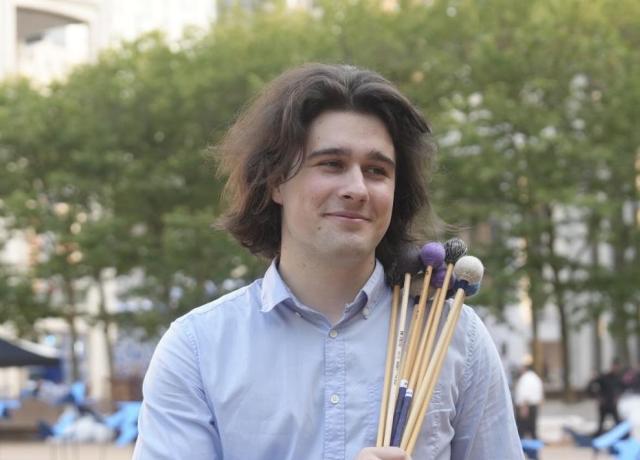
Photo: Boldizsár Kovács


Great Marimba Teachers
Through our longstanding commitment to treat teachers equitably, we work with phenomenal instructors — including members of the MET Orchestra, Juilliard and Berklee alumni, GRAMMY® winners and nominees, and many other professional educators.
View Teachers 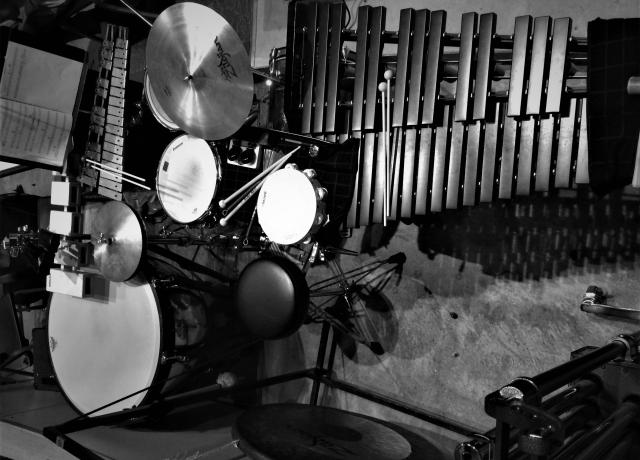
Photo: Cahaya Drucilla
About Marimba Lessons at Lessonface
Find a great teacher, securely book a first lesson or trial, and meet via Zoom. Lessonface handles the lesson links and sends you reminders. Recordings, assignments, and notes are easy to access before, during, and after the lesson.
View Teachers 


Latest from the Blog
Tips, stories, and interviews from the Marimba community.

Lessonface Guarantee
Reach out to tell us within 48-hours of taking an unsatisfactory lesson, class, or course, and we will offer you a refund. Read more about the guarantee.

Designed for All Ages
Creating a joyful, safe, and convenient educational experience for our students is our goal. Learn more about our kid-friendly features here, or read our privacy policy and safety precautions here.
Have more questions? Check out our FAQ, or reach out.
About Lessonface
At Lessonface, we've held our mission of helping students achieve their goals while treating teachers equitably for over ten years. We're here to help you connect to your ideal teacher and make real progress. Please reach out with any questions or concerns.
 Claire Cunningham
- Founder & CEO
What is Lessonface?
Lessonface is a Public Benefit Corporation operating since 2012 whose purpose is to connect students with great teachers for music, language, and arts lessons. Teachers on Lessonface set their own rates and profiles, and students can select their ideal teachers based on their background, teaching style, rates, and schedule.
How do online Marimba lessons work?
Online lessons are effective, affordable, and accessible. Lessonface qualifies teachers in over 300 music, language, and arts subjects, including Marimba. Students can browse teachers' profiles, send them messages, and book lessons securely through Lessonface. Lessons happen via Zoom links that are securely generated for each lesson, and can be easily recorded by the teacher. Recordings, notes, and attachments can all be accessed from within the Lessonface dashboard. Lessons can be booked one at a time, in packages, or by subscription to save a spot on the teacher's calendar. Lessonface hosts recitals, open mics, group classes, and self-paced courses too. Registering an account is free so it's easy to get started reaching out to find your ideal instructor. Contact us with any further questions!
What is the best method for learning Marimba ?
We're biased, of course, but at Lessonface we believe the best way to learn Marimba is through one-on-one lessons. Personalized instruction means your teacher can tailor every lesson to your goals, learning style, and skill level. Online group classes can also be a great way to make learning fun and social. Learning Marimba online makes it easy to stay consistent, which is essential to steady progress.
There are plenty of apps and YouTube videos out there to help with learning Marimba, but most teachers agree that those resources work best as supplements to, not replacements for, one-on-one instruction. A skilled Marimba teacher can identify bad habits before they become ingrained, help you focus on what matters most, and solve problems as soon as they arise, often saving you months of frustration and wasted practice time. The bottom line? A real teacher accelerates your progress and keeps you on the right path from day one.
How do I find the best teacher for me for Marimba lessons?
With over 100 qualified Marimba teachers who have together earned an average of 5 out of 5 stars over 28 lesson reviews by verified students, you can be sure to find a great instructor at Lessonface.
Lessonface offers free tools to help you find the ideal tutor for you or your family:
- Use the open filtering system
- Use our matching service to describe your background, scheduling preferences, and any particular goals, and qualified Marimba teachers will respond.
You can view teachers' bios, accolades, rates, send them a message and book lessons from their profiles.
Many teachers offer a free trial, and you can book lessons one at a time until you decide you prefer to book a bundle or subscribe, so don't hesitate to try. Teachers may also offer group classes, self-paced courses, and downloadable content, so there are more ways to get started while you're still getting acquainted with the community.
How much do Marimba lessons cost?
Marimba teachers on Lessonface set their own rates. Rates are displayed on the teachers' profile pages and in the checkout process prior to booking. Teachers may choose to change their rates for new bookings, and students will always be notified prior to making payment. The average paid for a Marimba lesson on Lessonface in the past 12 months was $38.83. Some Marimba teachers offer a free trial lesson to new students, which are not factored into the average prices.
How does payment work for Marimba lessons?
There is no fee until you book your first paid lesson. Many teachers offer free trial lessons. Students can opt to book one a time, or purchase lesson packages or subscriptions for scheduling convenience, and, depending on the teachers, a discount. Payment can be made by credit card or Paypal. Lessons booked with a subscription are pre-paid three days before the end of the month for lessons that are scheduled for the following month. Subscription payments can only be made by credit card (not Paypal). Teachers receive their payment after the lesson has been completed.
Do I need a marimba at home to take lessons?
A full concert marimba at home would be wonderful, but it's not a realistic starting point for most students — and it's not required to begin taking lessons. Marimbas are large, expensive instruments, and many beginners make real progress without one at home, especially early on.
The most common and practical alternative is a keyboard percussion instrument like a xylophone or bell kit. These share the same layout as a marimba — notes arranged like piano keys — so you can practice scales, patterns, and basic repertoire on them. They won't replicate the feel or sound of a marimba, but they'll keep your fingers moving and your music reading sharp between lessons.
A few options worth knowing about:
- Bell kits — affordable and compact, good for total beginners working on fundamentals
- Practice xylophones — closer in size and feel to a marimba than a bell kit, better for intermediate work
- Electronic keyboard — useful for music theory and learning note layouts, though mallet technique won't transfer directly
- Practice marimbas — scaled-down or entry-level marimbas exist at more accessible price points and are worth considering if you get serious
Access to a marimba at school, a community music program, or a rehearsal studio can also fill the gap. Many students combine limited home practice on a substitute instrument with more focused work on a real marimba during lessons.
Your teacher is the best person to advise you on what makes sense for your situation and goals.
Where does the marimba come from?
The marimba has one of the most traveled histories of any instrument in the world — and its story is inseparable from the history of the African diaspora.
The name itself comes from Bantu languages of Sub-Saharan Africa, where "rimba" suggests "sound of wood" and "ma" is a cumulative prefix — together meaning something like "many sounds of wood." Early African versions of the instrument used wooden bars suspended over gourd resonators, and the instrument held deep ceremonial and community significance across multiple African cultures.
The first historical account of the marimba in Central America dates to 1550, where enslaved Africans in Guatemala are recorded playing it. Over the following centuries it took root across the region, blending with Indigenous and Ladino musical traditions. In 1821 the marimba was proclaimed the national instrument of Guatemala. It remains central to the musical identity of Guatemala, southern Mexico, and much of Central America today.
The modern orchestral marimba — the instrument used in classical concert settings — developed later. The orchestral marimba, with metal resonators, was developed in the United States in the early 20th century by instrument makers J.C. Deagan and U.G. Leedy. This version expanded the instrument's range and eventually brought it into orchestras, percussion ensembles, and conservatories worldwide.
Worth noting: some historians debate whether similar instruments may have developed independently in parts of Southeast Asia and Central America before African contact — the full picture is still contested among ethnomusicologists.
What styles of music can you play on marimba?
The marimba's stylistic range is broader than most people expect. It has deep roots in specific folk traditions, a serious classical concert repertoire, and a surprising number of pop culture appearances along the way.
Its most natural home is Central American and Latin American traditional music — particularly in Guatemala and southern Mexico, where marimba bands have been central to festivals, ceremonies, and community life for centuries. This tradition has its own rich repertoire of waltzes, sones, and dance music that's quite distinct from what you'd hear in a concert hall.
In Western classical music, the marimba has built a substantial solo and ensemble repertoire since the mid-20th century. Composers like Darius Milhaud and Paul Creston were early champions, and today there's a rich body of concertos, solo works, and chamber music written specifically for the instrument.
Beyond those two traditions, the marimba turns up in some unexpected places:
- Jazz — a number of notable vibraphonists have crossed over to marimba, and it's used in Latin jazz in particular
- Contemporary and experimental music — composers like Steve Reich have used the marimba's resonant, rhythmic qualities to striking effect
- Pop and rock — the Rolling Stones used it on "Under My Thumb," and it appears on recordings by Elton John, Frank Zappa, and others
- Marching percussion and drum corps — the marimba is a staple of front ensemble percussion
Most students start with classical and folk-influenced repertoire and branch out from there.
Why does the marimba have tubes hanging underneath it, and what do they do?
Those tubes are called resonators, and they're one of the most important parts of what makes the marimba sound like a marimba rather than a xylophone.
Here's how they work: when you strike a wooden bar, it produces a note — but on its own, that note decays quickly and sounds relatively thin and dry. The resonator tube hanging below each bar is tuned to match exactly the pitch of that bar. When the bar vibrates, the air column inside the tube vibrates in sympathy, amplifying the sound and sustaining it longer. The result is that warm, full, resonant quality that gives the marimba its distinctive voice.
Each tube is a different length because each note has a different pitch — lower notes have longer tubes, higher notes have shorter ones. That's why the marimba has that characteristic sloping silhouette when you look at it from the side.
A few other things worth knowing about resonators:
- Traditional instruments used hollowed-out gourds instead of metal tubes — you can still find this on folk marimbas in Central America and Africa
- In Central American marimbas, a small hole is often cut in the resonator and covered with a thin membrane, which adds a characteristic buzzing quality to the sound called charleo
- The size and material of the resonators affect the tone — metal tubes produce a cleaner, more focused sound than wooden or gourd resonators
Without the resonators, a marimba would sound noticeably thinner and less singing. They're doing a lot of the work.
Why do some marimba pieces require four mallets, and how does a player control all four?
With two mallets — one in each hand — you can play melodies and simple patterns. But a lot of the most interesting marimba music requires chords, fuller harmonies, and the ability to play in multiple registers at once. That's where four mallets come in. With two mallets in each hand, a single player can cover a much wider range of the instrument simultaneously, producing a richer, more orchestral sound.
Holding four mallets comfortably takes practice. Each hand holds two mallets, and the key challenge is being able to control them independently — changing the interval between them, striking individual mallets without moving the other, and doing all of this while moving across a large instrument. There are several established grip systems players use, the most common being the Stevens grip and the Traditional grip. Each has its advocates, and teachers often have strong preferences. The right choice depends on your hand size, the repertoire you want to play, and what feels most natural.
Beginners shouldn't be intimidated by four-mallet technique — it's not where you start. Most students begin with two mallets, focusing on tone, basic technique, and repertoire. Four mallets are typically introduced once a player has solid fundamentals, often after several months of study. Some teachers bring in basic four-mallet concepts earlier, since developing hand independence sooner has its advantages, but there's no rush.
If four-mallet playing is something you're drawn to, mention it when looking for a teacher — not all marimba instructors specialize in it equally.