









Find Your Ideal Mountain Dulcimer Teacher for Lessons Online
For beginners to advanced, kids & adults, these excellent Mountain Dulcimer teachers are vetted by staff experts and reviewed by verified students of online lessons at Lessonface.
View All Teachers Related Topics
Discover experienced, passionate Mountain Dulcimer teachers to help you reach your next level.
6 Years on Lessonface
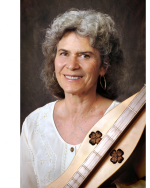
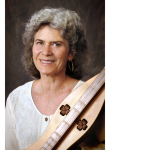
Anne Lough
Anne Lough is an internationally known traditional musician with over thirty five years’ experience in performance and education. With a Music Education Degree from Murray State University Murray, KY and a Masters of Music Education Degree from Western Carolina University, Cullowhee, NC, Anne now devotes her time to festivals, workshops, performances, Road Scholar classes and…
$50.00 / 60 min

2 Years on Lessonface
Mandy Tyner
Mandy has been teaching banjo since 2012, and mountain dulcimer since 2018. She teaches online, in-person locally, and at festivals around the United States. She has been an endorsed artist for Folkcraft Instruments since 2021. She has taught/and or performed at events in Florida, Georgia, Indiana, Kentucky, North Carolina, and multiple online events such as QDF (Quarantunes…
$30.00 / 30 min
6 Years on Lessonface
Michael Lanier
Hi there! I’m Michael Lanier, and I love teaching music! I'm a lifelong musician of multiple instruments, and I've been teaching since 2014. I hold a bachelor's degree in music, and a master's degree in music education. I teach a variety of instruments, both common and obscure, across a diverse array of styles and genres.
$30.00 / 30 min

13 Years on Lessonface
Michael Kent Smith
Heart Dance Recording Artist and multi-instrumentalist Michael Kent Smith has over 20 years of experience teaching rock, blues, jazz, fingerstyle and classical guitar. Smith’s latest album on Heart Dance Records, ‘After the Harvest’, is creating a buzz in the industry and was nominated for “Acoustic Guitar Album of the Year” in England and “Acoustic Instrumental Album of the Year”…
$30.00 / 30 min

Want help finding your ideal mountain dulcimer teacher?
Fill out the quick form and teachers who fit your needs will be in touch.
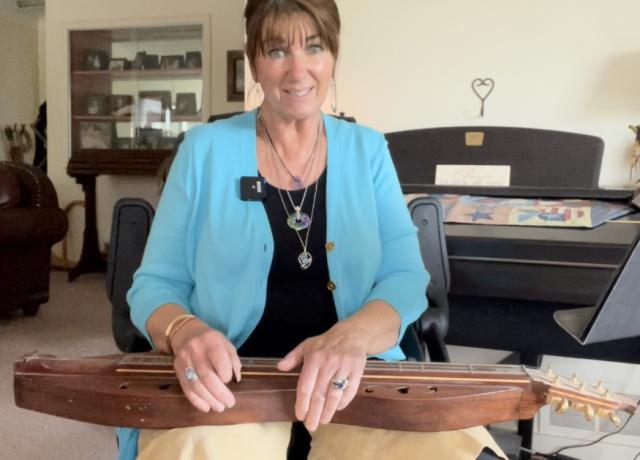
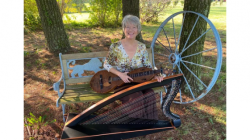
Photo: Rhonda Clark


Great Mountain Dulcimer Teachers
Through our longstanding commitment to treat teachers equitably, we work with phenomenal instructors — including members of the MET Orchestra, Juilliard and Berklee alumni, GRAMMY® winners and nominees, and many other professional educators.
View Teachers 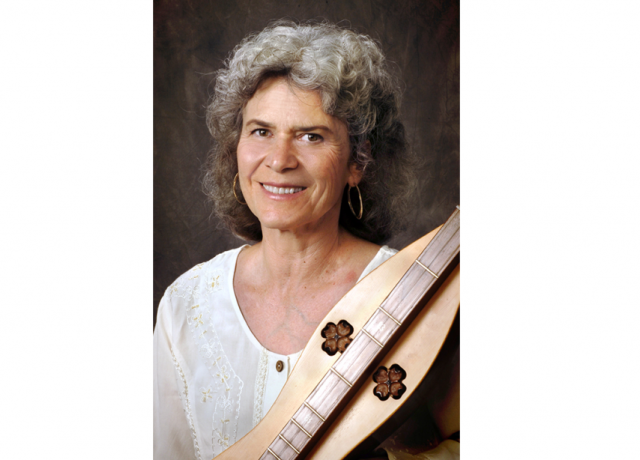
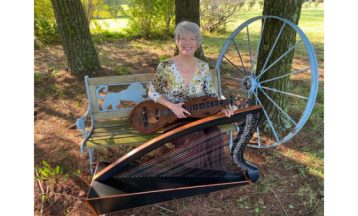
Photo: Anne Lough
About Mountain Dulcimer Lessons at Lessonface
Find a great teacher, securely book a first lesson or trial, and meet via Zoom. Lessonface handles the lesson links and sends you reminders. Recordings, assignments, and notes are easy to access before, during, and after the lesson.
View Teachers Learn Mountain Dulcimer at your own pace with self-paced courses.
6
Self-Paced Courses
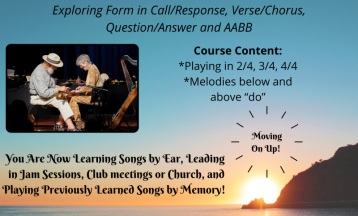
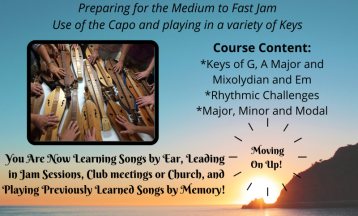
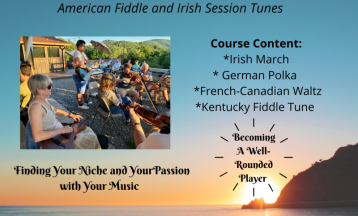
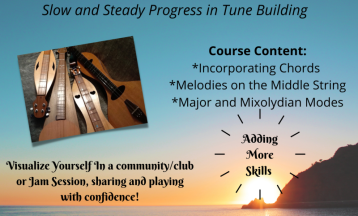
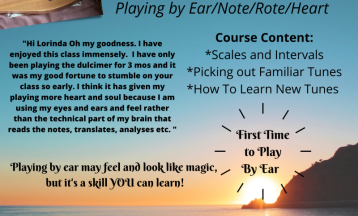
Traditional Playing of the Mountain Dulcimer - DAA Tuning and Playing With the Noter by Lorinda Jones
 Lorinda Jones
 23 chapters
$79.00


Latest from the Blog
Tips, stories, and interviews from the Mountain Dulcimer community.



Lessonface Guarantee
Reach out to tell us within 48-hours of taking an unsatisfactory lesson, class, or course, and we will offer you a refund. Read more about the guarantee.

Designed for All Ages
Creating a joyful, safe, and convenient educational experience for our students is our goal. Learn more about our kid-friendly features here, or read our privacy policy and safety precautions here.
Have more questions? Check out our FAQ, or reach out.
About Lessonface
At Lessonface, we've held our mission of helping students achieve their goals while treating teachers equitably for over ten years. We're here to help you connect to your ideal teacher and make real progress. Please reach out with any questions or concerns.
 Claire Cunningham
- Founder & CEO
What is Lessonface?
Lessonface is a Public Benefit Corporation operating since 2012 whose purpose is to connect students with great teachers for music, language, and arts lessons. Teachers on Lessonface set their own rates and profiles, and students can select their ideal teachers based on their background, teaching style, rates, and schedule.
How do online Mountain Dulcimer lessons work?
Online lessons are effective, affordable, and accessible. Lessonface qualifies teachers in over 300 music, language, and arts subjects, including Mountain Dulcimer. Students can browse teachers' profiles, send them messages, and book lessons securely through Lessonface. Lessons happen via Zoom links that are securely generated for each lesson, and can be easily recorded by the teacher. Recordings, notes, and attachments can all be accessed from within the Lessonface dashboard. Lessons can be booked one at a time, in packages, or by subscription to save a spot on the teacher's calendar. Lessonface hosts recitals, open mics, group classes, and self-paced courses too. Registering an account is free so it's easy to get started reaching out to find your ideal instructor. Contact us with any further questions!
What is the best method for learning Mountain Dulcimer ?
We're biased, of course, but at Lessonface we believe the best way to learn Mountain Dulcimer is through one-on-one lessons. Personalized instruction means your teacher can tailor every lesson to your goals, learning style, and skill level. Online group classes can also be a great way to make learning fun and social. Learning Mountain Dulcimer online makes it easy to stay consistent, which is essential to steady progress.
There are plenty of apps and YouTube videos out there to help with learning Mountain Dulcimer, but most teachers agree that those resources work best as supplements to, not replacements for, one-on-one instruction. A skilled Mountain Dulcimer teacher can identify bad habits before they become ingrained, help you focus on what matters most, and solve problems as soon as they arise, often saving you months of frustration and wasted practice time. The bottom line? A real teacher accelerates your progress and keeps you on the right path from day one.
How do I find the best teacher for me for Mountain Dulcimer lessons?
With over 100 qualified Mountain Dulcimer teachers who have together earned an average of 5 out of 5 stars over 72 lesson reviews by verified students, you can be sure to find a great instructor at Lessonface.
Lessonface offers free tools to help you find the ideal tutor for you or your family:
- Use the open filtering system
- Use our matching service to describe your background, scheduling preferences, and any particular goals, and qualified Mountain Dulcimer teachers will respond.
You can view teachers' bios, accolades, rates, send them a message and book lessons from their profiles.
Many teachers offer a free trial, and you can book lessons one at a time until you decide you prefer to book a bundle or subscribe, so don't hesitate to try. Teachers may also offer group classes, self-paced courses, and downloadable content, so there are more ways to get started while you're still getting acquainted with the community.
How much do Mountain Dulcimer lessons cost?
Mountain Dulcimer teachers on Lessonface set their own rates. Rates are displayed on the teachers' profile pages and in the checkout process prior to booking. Teachers may choose to change their rates for new bookings, and students will always be notified prior to making payment. The average paid for a Mountain Dulcimer lesson on Lessonface in the past 12 months was $32.33. Some Mountain Dulcimer teachers offer a free trial lesson to new students, which are not factored into the average prices.
How does payment work for Mountain Dulcimer lessons?
There is no fee until you book your first paid lesson. Many teachers offer free trial lessons. Students can opt to book one a time, or purchase lesson packages or subscriptions for scheduling convenience, and, depending on the teachers, a discount. Payment can be made by credit card or Paypal. Lessons booked with a subscription are pre-paid three days before the end of the month for lessons that are scheduled for the following month. Subscription payments can only be made by credit card (not Paypal). Teachers receive their payment after the lesson has been completed.
What is a mountain dulcimer, and where does it come from?
The mountain dulcimer — also called the Appalachian dulcimer or lap dulcimer — is a fretted string instrument played on the player's lap. It typically has three or four strings, and its fretting is generally diatonic, meaning it's built to play the notes of a major scale rather than every chromatic note. The sound is soft, sweet, and drone-y — distinctly American, with a quality that feels both ancient and intimate.
The instrument first appeared in the early 19th century among Scotch-Irish immigrant communities in the Appalachian Mountains. Its exact origins are debated among historians — most point to European fretted zithers, particularly the German scheitholt, as likely ancestors brought over by settlers and gradually adapted into something new. Worth noting: the instrument has no known precedent in Ireland or Scotland specifically, despite those communities being closely associated with Appalachian music. It's generally considered a uniquely American addition to the fretted zither family.
For most of its early history the dulcimer stayed close to home, played in households and small gatherings across the Appalachian region. That changed in the mid-20th century. Jean Ritchie is widely credited as the main driver of the dulcimer revival, bringing it to national and international audiences through recordings and performances. Her tutorial, The Dulcimer Book, was for many years the only major instruction book available on the instrument and remains an important reference today.
What styles of music can you play on mountain dulcimer?
The mountain dulcimer is most at home in Appalachian folk and traditional American music — the repertoire it was built for. Old-time tunes, ballads, hymns, and fiddle tunes all sit naturally on the instrument, and its drone-y, modal sound gives that music an authenticity that's hard to replicate on anything else.
But the dulcimer is more versatile than its folk roots might suggest. Many players explore Celtic and Irish traditional music, which shares some of the same modal scales and melodic sensibility. Blues works surprisingly well on dulcimer, particularly in certain tunings. And plenty of players use it for singer-songwriter and contemporary folk music — it's a beautiful accompaniment instrument for vocals.
A few styles players commonly explore:
- Appalachian and old-time folk
- Celtic and Irish traditional
- Blues and early American roots music
- Gospel and sacred music
- Contemporary folk and singer-songwriter
- Renaissance and early music (the diatonic fretting suits it well)
One thing worth knowing: the standard dulcimer has a diatonic fretboard, which means it's naturally set up for certain keys and modes. Some players add extra frets for more chromatic flexibility, but even a standard dulcimer can cover a lot of musical ground with the right tuning choices. A good teacher can help you figure out which styles suit your instrument and your goals.
How is the mountain dulcimer different from other dulcimers, like the hammered dulcimer?
The name "dulcimer" actually covers two very different instruments that happen to share a word. If you've seen someone playing what looks like a trapezoid-shaped box laid flat on a table, strings running across it, struck with small hammers — that's the hammered dulcimer. It's a percussion-string instrument, closer in family to a piano or xylophone than to a guitar. It has a much bigger, brighter sound and is considerably more complex to learn.
The mountain dulcimer is a completely different animal. You hold it on your lap, fret the strings with your fingers or a small stick called a noter, and strum or pick with your other hand. It has three or four strings and a long, narrow body — often hourglass or teardrop shaped. The sound is quieter and more intimate than the hammered dulcimer, with that characteristic drone running underneath the melody.
A few key differences at a glance:
- Mountain dulcimer: held on the lap, fretted, plucked or strummed, 3-4 strings, diatonic
- Hammered dulcimer: laid flat, struck with hammers, many more strings, fully chromatic
- Mountain dulcimer: easier entry point for beginners, especially those new to string instruments
- Hammered dulcimer: steeper learning curve, requires two-handed coordination from the start
The two instruments don't share much technique or repertoire. If you're drawn to the soft, folk sound of the mountain dulcimer, that's its own path entirely.
What are the different ways to play mountain dulcimer?
One of the appealing things about the mountain dulcimer is that there are several distinct ways to play it, and they produce quite different sounds and suit different styles of music.
The two broadest approaches are strumming and fingerpicking. Strumming — dragging a pick or your fingers across all the strings — gives you that full, ringing, drone-heavy sound the dulcimer is known for. It's the most traditional approach and works beautifully for song accompaniment and rhythm playing. Fingerpicking lets you pick out individual strings, giving you more control over melody and a cleaner, more delicate sound. It takes more coordination but opens up a wider range of musical possibilities.
There's also a distinction between noter-drone style and chord-melody style. In noter-drone playing — the oldest traditional approach — you press the melody string with a small stick called a noter while the other strings ring open as drones. It produces that haunting, bagpipe-like sound and is closely tied to Appalachian tradition. Chord-melody playing uses the fingers to fret multiple strings at once, more like a guitar, and allows for fuller harmonies and a wider repertoire.
Many players start with strumming and noter-drone style, then expand from there. Others come from a guitar background and jump straight into fingerpicking and chord-melody. A good teacher will help you figure out which approach fits your goals — and there's no rule that says you have to stick to just one.
Can I learn mountain dulcimer if I have small hands or limited finger dexterity?
The mountain dulcimer is one of the most accessible string instruments for players with small hands or dexterity challenges — and that's not just encouragement, it's a genuine feature of the instrument's design.
A few reasons why:
- The dulcimer sits on your lap, so there's no need to support the instrument while playing. Both hands are free to focus entirely on technique.
- The neck is narrow and the string spacing is relatively forgiving compared to guitar or mandolin.
- In noter-drone style, you're only fretting one string at a time with a small stick — no complex chord shapes, no need to stretch multiple fingers across the fretboard simultaneously.
- The strings are typically strung with light gauge wire and sit close to the fretboard, so pressing them down doesn't require much force.
Players with arthritis, limited grip strength, or reduced finger mobility have found the dulcimer workable when other instruments weren't. The noter-drone style in particular removes most of the demands that challenge players with dexterity issues on other instruments.
That said, every player's situation is different. If you have specific concerns, it's worth mentioning them when you're looking for a teacher — a good dulcimer instructor can suggest techniques, accessories, and instrument setups that make playing even more comfortable.